Mastering Industrial Aesthetics with Steampunk Backgrounds
In the world of digital design, there is a constant hunger for assets that convey history, texture, and narrative without saying a word. While flat colors and minimal gradients have their place, they often lack the tactile depth required to make a project truly memorable. This is where the power of Vintage Grunge Steampunk Backgrounds becomes undeniable. These design assets do more than just fill space; they transport the viewer to an alternate history where Victorian elegance meets industrial grit. For designers, marketers, and content creators, this specific aesthetic offers a rich visual language that suggests durability, complexity, and a sense of timeless adventure.
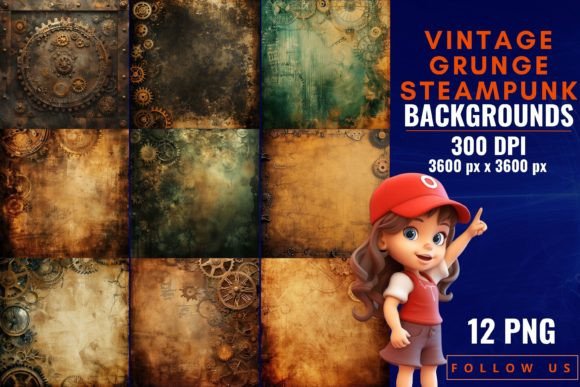
At its core, the steampunk style is a celebration of the "beautiful machine." It fuses the ornate flourishes of the 19th century with the heavy, mechanical components of the Industrial Revolution. When you layer in a "vintage grunge" texture, you add the element of time. You aren't just looking at a clean machine; you are looking at a machine that has lived, worked, and weathered the storms. The visual characteristics of these backgrounds often include distressed metal surfaces, oxidized copper and bronze tones, intricate clockwork gears, and sepia-tinted overlays. The personality of this style is bold yet sophisticated. It feels established and authoritative, yet it retains a sense of fantasy and imagination. It is the visual equivalent of a well-worn leather journal or a brass telescope—objects that carry stories within their scratches and patina.
Strategic Applications: Where Industrial Texture Fits Best
Understanding the visual appeal is one thing, but knowing how to deploy these assets effectively is where the real design strategy comes into play. Vintage Grunge Steampunk Backgrounds are incredibly versatile, but they shine brightest in specific contexts where atmosphere is key. For digital art and social media graphics, these backgrounds provide an immediate focal point that cuts through the noise of a busy feed. A textured, industrial background can ground a floating product mockup or a text overlay, giving it a physical presence that flat design often fails to achieve.
In the realm of presentation design, particularly for pitches involving engineering, history, craftsmanship, or innovation, these backgrounds can set a serious, industrious tone. They suggest that the content is built on a solid foundation. For packaging design, especially for products like craft coffee, artisanal spirits, or men’s grooming products, the grunge steampunk aesthetic communicates quality and heritage. It tells the consumer that the product inside is crafted with care, much like the intricate machinery depicted in the background. Furthermore, for brand identity projects targeting niche markets—such as escape rooms, vintage clothing lines, or specialty bookstores—these backgrounds are not just decorative; they are essential components of the visual storytelling.
The Psychology of Aesthetic: Influence on Brand Perception
Design is not just about what looks good; it is about how visuals make people feel. When you incorporate Vintage Grunge Steampunk Backgrounds into your projects, you are tapping into specific psychological triggers that influence how your audience perceives your brand or message. The "grunge" element introduces a raw, authentic honesty. It removes the sterile perfection of corporate digital design and replaces it with something that feels human and tangible. This can increase trust and relatability for audiences who are tired of overly polished, artificial imagery.
The "steampunk" element, on the other hand, evokes a sense of ingenuity and complexity. It suggests that there is a lot going on under the surface—that the subject matter is intricate and worth exploring. This combination is powerful for brand perception. It positions a brand as creative, detail-oriented, and perhaps a bit rebellious against modern minimalism. Whether used in web design as a hero image or in editorial design as a chapter opener, these backgrounds help establish a strong visual hierarchy. The rich textures provide a high-contrast canvas for typography, allowing text to pop, particularly when using clean sans-serif fonts or elegant serif typefaces that mimic the era.
Practical Implementation: Pairing, Testing, and Licensing
Integrating such a distinct style requires a thoughtful approach to ensure it enhances rather than overwhelms. One of the most critical aspects of working with Vintage Grunge Steampunk Backgrounds is font pairing. Because these backgrounds are visually dense and textured, they demand typography that can stand up to the weight. A heavy, industrial display font might work for headers, but for body text, you need contrast. Consider using a clean, modern sans serif font or a highly legible serif font for paragraphs to ensure readability. The background should support the text, not compete with it. Avoid overly decorative script fonts or handwritten fonts for large blocks of text, as the grunge texture can make them difficult to decipher.
Before finalizing your design, always test how the background interacts with your other elements. Zoom in to check the resolution—high-quality design assets will maintain their intricate details without pixelation, which is crucial for print design. Check the color balance; often, desaturating the background slightly or applying a subtle overlay can help your foreground elements stand out. Finally, always pay close attention to licensing. If you are working on a commercial font or asset project, ensure the collection includes a license that covers your specific usage, whether it is for merchandise, client work, or digital distribution. By respecting the aesthetic and applying it with technical precision, you can use these industrial textures to create work that feels both timeless and innovative.